
The Catchpenny
Have we clicked yet? And can we stop now?

Don’t you love it when the enemy shares its strategy with you? And an eighteenth-century strategy at that.
Imagine being duped this way today?
A cheap, sensational pamphlet sold on street corners.
Deliberately lurid, designed to extract a coin from a passing stranger.
Scammed before they noticed the content was worthless.
A transaction wholly dependent on completion before a buyer can think twice.
You would have to be mad to get caught like that.
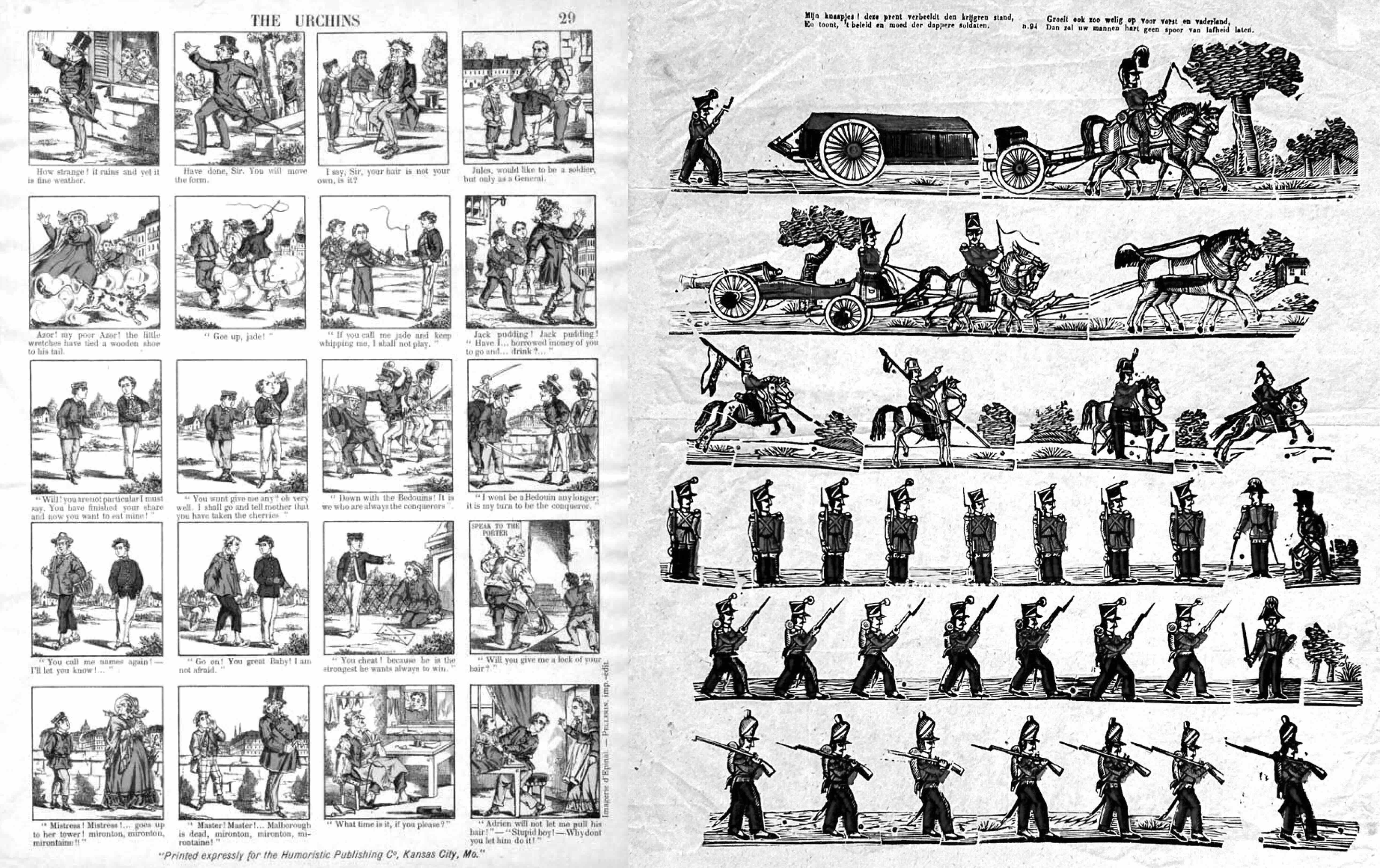
Well. We are.
The street corner is now your phone.
The penny is your attention and your data, and, over time, your capacity to trust anything you read. The scammers turn your hypothetical penny into significant moolah by telling Advertisers just how many eyeballs they scored on the corner of Oxford Street and Regent Street. Or Broadway and 52nd.
These ‘pamphlets’ are the homepage of every major English-language news publisher on earth. They have a formal vocabulary for it now. Of course they bloody do. An internally circulated training document kind of vocabulary. That terminological trail is the smoking gun.
Inside editorial meetings and the doubtless soulless PowerPoint decks, the industry never ever calls it clickbait.
It calls it a curiosity gap.
The curiosity gap is the calculated distance between what you already know and what you haven’t yet been told. By them. And it’s possible you may never know.
The headline is engineered to widen that gap to precisely the point where clicking feels involuntary.
Upworthy’s co-founder Peter Koechley articulated the mechanic without apparent self-consciousness: “Too vague and I don’t care. Too specific, I don’t need to click.”
The sweet spot, the moment you feel compelled but haven’t yet been satisfied, is the product. That is what they sell to advertisers. What they never say is that 75% of what gets shared is never read beyond the headline. And imagine that in the minds of those who then go on to base their entire worldview on it.
Upworthy required writers to produce about twenty-five headline variations for a single story. Favourites were picked. These ran simultaneously on live audiences through what the company called, with irony-free cheerfulness, the “Magical Unicorn Box“ - an A/B testing system that identified the winner by click-through rate.
The editorial judgment lived in the machine. The moral accountability therefore belonged to, err…no one.
I looked it up. The linguistic mechanism has a formal name: cataphora, or forward reference. A grammatical move that deliberately withholds the subject of a sentence until after the reader has already leaned in.
“This is what happened when...” - “She didn’t expect what came next...” - “You won’t believe what they did.” - These are engineered constructions. The people producing them were trained to do so.
What’s going down?
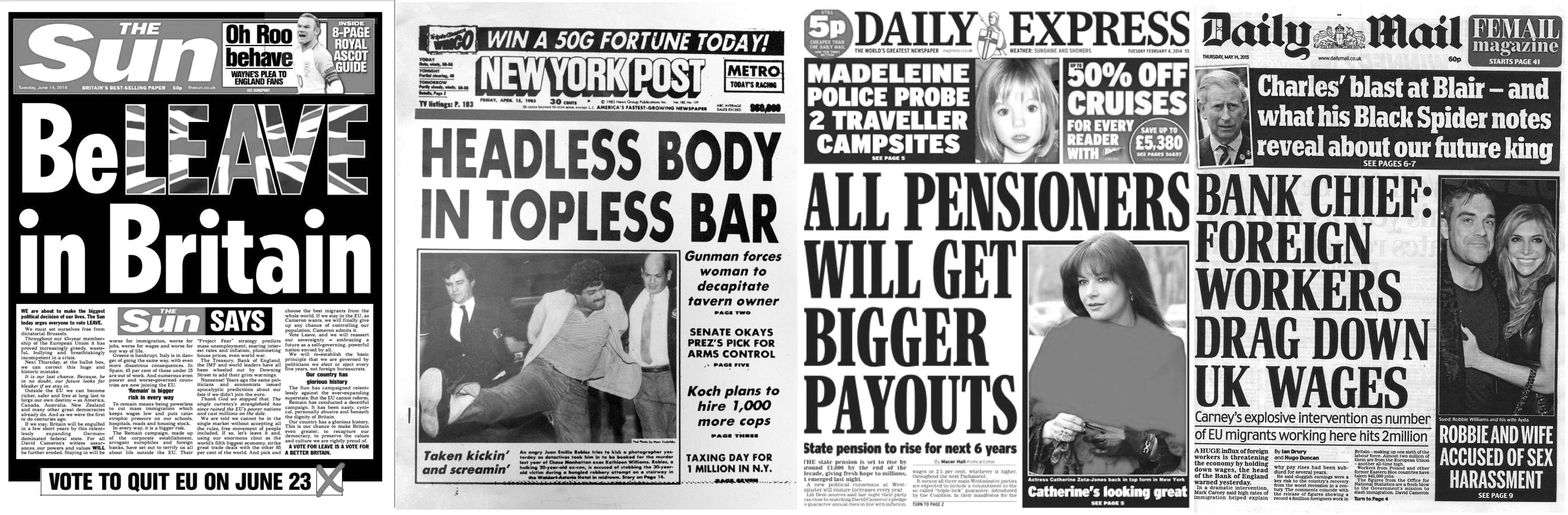
A/B headline testing is now standard practice across MailOnline, HuffPost, The Mirror, The Sun, and dozens of regional publishers that have quietly outsourced their editorial judgment to ‘Chartbeat’ dashboards.
The algorithm selects the winning headline. No individual journalist has to make a moral decision because the moral decision has been entirely automated out of the process.
Upworthy formalised the curiosity gap as a production workflow and published the methodology as internal training material.
BuzzFeed took the underlying mechanic and built an industrial listicle machine around it, while…
Vice spent a decade packaging an identical engagement-farming architecture within the aesthetic of counterculture journalism.
MailOnline operates this at a scale that makes all of the above look like a corner shop.
The Daily Mail Group runs the largest English-language newspaper website in the world, and its headlines run on a production-line formula: “find out what happened next,” “The moment when...,” “Watch what happens when...” - applied to geopolitical crises and a celebrity’s swimming costume with exactly the same commitment.
The Daily Mail Group built this system deliberately and scaled it globally. The revenue followed. The parliamentary committee on victimhood came later.
The Guardian A/B tests headlines through its own editorial tools. Anyone who has watched a serious investigative piece land in their feed under a headline beginning “What no one is telling you about...” has watched the system at work.
Respectable mastheads discovered that the machinery functions regardless of who is operating it. And IPSO - the UK’s Independent Press Standards Organisation, whose function is to hold all of this to account, has been issuing rulings against misleading clickbait headlines and watching publishers shrug for years.
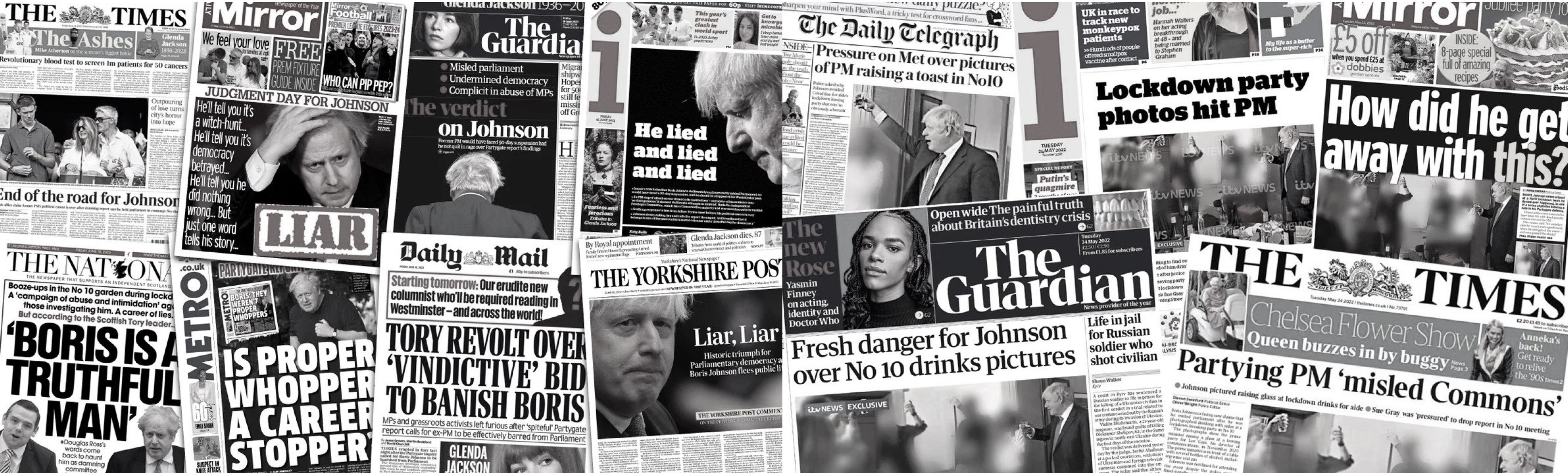
Its ruling against Reach (owners of The Mirror, the Daily Express, and a portfolio of regional titles) confirmed that curiosity gap headlines breach the Editors’ Code. The sanction amounted to a published correction buried where no algorithm would direct traffic. Reach’s click-through rates were unaffected.
There were three denials.
When pressed, the industry reaches for one of three positions. Blame the algorithm. Meta rewards engagement. Google rewards clicks. TikTok’s algorithm has dispensed with editorial consideration altogether.
Publishers therefore argue that writing plain, informative headlines is a commercially suicidal act in a broken digital economy.
The argument dissolves the moment you notice that the same publishers are simultaneously lobbying against meaningful platform regulation while banking the advertising revenue generated by clickbait. Hostage and beneficiary are not compatible identities.
We’re doing it for you. Media executives have taken to describing the practice internally as “audience development” and “democratising the news.”
The logic is that if a sensationalised headline gets a reader to engage with an otherwise important investigative piece, the trade-off is justified.
The Society of Professional Journalists’ ethical code states plainly that journalism must minimise harm and seek truth. Weaponising psychological vulnerability to force a click does not minimise harm. The journalists on the ground know this. The executives issuing the optimisation briefs know the journalists know this.
We regulate ourselves. IPSO operates on funding from the industry it regulates, without the power to impose financial penalties that would register on any media conglomerate’s P&L.
Self-regulation in this context is pure theatre, not even the kind that makes you feel something. It is theatre that exists to forestall the genuine article.
What the terminology proves
Vocabulary only exists when a practice is established enough to need a name. “Curiosity gap” sits in onboarding documents and gets measured on dashboards every quarter. It has line managers and job titles that reference it without embarrassment.
The news industry has given its catchpennies Latin grammatical names, psychological frameworks, and industrial-scale testing infrastructure.
It has built entire optimisation departments around the deliberate manufacture of the one thing it publicly claims to be fighting: the collapse of public trust in the press.
This cat has been out of the bag for years. Now it’s time to let our curiosity kill it.
Catchpenny: Oxford English Dictionary, earliest documented use 1705. oed.com/dictionary/catchpenny_n
Three in four people share news without reading beyond the headline: Nature Human Behaviour, University of Florida, 2024. doi.org/10.1038/s41562-024-02067-4
Upworthy’s 25-headline process and the Magical Unicorn Box: Peter Koechley, Upworthy, via Social Media Today. socialmediatoday.com/content/backed-science-trying-25-headline-upworthy-challenge
IPSO rules against Reach over clickbait headlines: Press Gazette, 14 February 2025. pressgazette.substack.com/p/ipso-rules-against-reach-over-clickbait
MailOnline traffic rankings: Press Gazette Media Metrics, 2025. pressgazette.co.uk/media-audience-and-business-data/media_metrics/most-popular-websites-news-world-monthly-2/
Thanks @JohnCaswell as always. The gap I also see is in the imagination gap of many newspaper owners. This #ragebait is only there to divide. Journalism is one of the most important frontiers of democracy. Here’s to more courageous leaders defying old tricks to manipulate. There are independent media leaders trying who need funding ...